By Francesca Olsen
The Columbia County Board of Elections will join in a lawsuit with Nassau County, and other New York counties, to declare ERMA, the state Election Reform and Modernization Act of 2005, unconstitutional.
BOE Commissioners Virginia Martin (D) and Jason Nastke (R) have updated the Board of Supervisors’ County Government Committee on the impending litigation.
At February’s meeting, Nastke told the committee that the County Attorney’s Office has reviewed the lawsuit paperwork, and is on board with the idea, provided the BOE get “something in writing” from Nassau that there will be no financial or legal implications from joining the suit.
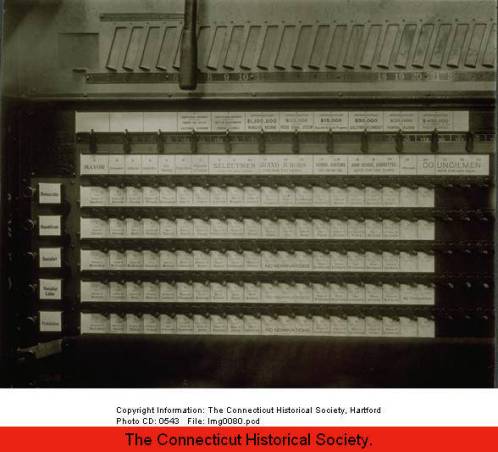
Under ERMA, traditional lever voting machines would be prohibited from use, and municipalities would have to replace them with computerized voting machines, either touch-screen or optical scanners. But ERMA doesn’t fund the replacement, meaning Columbia, and other New York counties, would need to foot the bill for the transition.
“My fundamental issue with this, aside from the reliability issue with the new machines, is essentially, the unfunded mandate costs being carried over to the county,” Nastke told the Register-Star. “Albany wants to talk a great deal about how we should save money, but then sends down mandates that will cost Columbia County alone $100,000 per election. It’s just wrong.”
“What’s not extricable from the cost issue is the complexity issue,” Martin added. “When things become more complex they become more costly to maintain or implement. There’s much more to do.”
For example, if elections do end up moving over completely to paper ballots, storing the ballots, printed for each registered voter, would require “Fort Knox” style security measures, including double locks and environmental controls. Machines would also need increased security.
Martin said that paper ballots used in elections now require the same kind of storage “but they comprise a very small portion of the votes that get cast. If we make the change to an election that’s fully voted on paper ballots, then we’re looking at a much greater storage space needed.”
“You have to print paper ballots for every voter, regardless of whether the voter shows up,” Nastke said. “What if there’s a last minute change on the ballot? Do we have to go out and reprint ballots?”
The Federal Help America Vote Act of 2002, which inspired ERMA and requires municipalities to make voting accessible to everyone regardless of disability, does not require that lever machines be fully replaced, and provides funding to municipalities for the purchase of new machines.
In 2008, Columbia County complied with HAVA by purchasing 52 Sequoia Imagecast optical scan and ballot marking devices for $600,000, 95 percent of which was covered by HAVA funding. The county paid $28,000.
Martin said that while new machines probably wouldn’t need to be purchased, the cost would still be high.
“It’s not a matter of buying more machines. It’s a matter of implementing it all, which is far more complex than a lever machine election,” she said.
There have also been deep concerns across the state as to whether optical scanners are as reliable as lever machines. They are computerized, and doubts about the security and accuracy of programs have been raised repeatedly. Also concerning to many is that the computerized language of ones and zeroes can’t be easily understood at a local level by election custodians who may not be familiar with computer programming.
Resistance to the switch is ongoing. In February of last year, the New York State Association of Towns passed a resolution stating that “the continued use of lever voting machines is in the best interest of the public and should be permitted to be used in future general elections ... the elimination of lever voting machines is costly to taxpayers, will result in another burden upon the local taxpayers, and will be confusing to the voting public without adequate time and education.”
And the Election Transparency Coalition, headed by Attorney Andrea Novick, has been requesting help and resources to litigate against ERMA. ETC’s Web site, www.electiontransparencycoalition.org, declares pointedly that “ERMA is unconstitutional.”
“HAVA said we had to make voting handicapped-accessible to everybody,” Nastke said. “We’ve done that. The state of New York said, we want everyone to use these new machines. There’s nothing wrong with our old machines. They work fine. You know whether or not the votes were counted ... they don’t go into some hidden software chip somewhere.”
Followers of current events may already know that the Nassau County Attorney is John Ciampoli, the same attorney who litigated for the Columbia County Republican Party in a suit over the validity of absentee ballots from last November’s election.
Which means Martin and Ciampoli, who is involved in the litigation to declare ERMA unconstitutional, will be on the same side of the argument this time around.
“It seems that we do agree on this,” she said. “It’s good that Nassau is doing this, or is preparing to do this.”
Other counties in New York, Martin said, are looking into joining the litigation as well.
Ciampoli said that the BOE commissioners in Nassau County are calling other commissioners in other counties to generate interest in joining the lawsuit, and that so far, there have been talks with New York City, Westchester, Suffolk, and “several other counties.”
He added that paperwork has not been officially filed yet, but interviews with people to serve as expert witnesses are being conducted, an expert has already been retained, and reviews are being conducted with the attorney’s office and Board of Elections.
To reach reporter Francesca Olsen call 518-828-1616, ext. 2272, or e-mail folsen@registerstar.com.
BOE Commissioners Virginia Martin (D) and Jason Nastke (R) have updated the Board of Supervisors’ County Government Committee on the impending litigation.
At February’s meeting, Nastke told the committee that the County Attorney’s Office has reviewed the lawsuit paperwork, and is on board with the idea, provided the BOE get “something in writing” from Nassau that there will be no financial or legal implications from joining the suit.
Under ERMA, traditional lever voting machines would be prohibited from use, and municipalities would have to replace them with computerized voting machines, either touch-screen or optical scanners. But ERMA doesn’t fund the replacement, meaning Columbia, and other New York counties, would need to foot the bill for the transition.
“My fundamental issue with this, aside from the reliability issue with the new machines, is essentially, the unfunded mandate costs being carried over to the county,” Nastke told the Register-Star. “Albany wants to talk a great deal about how we should save money, but then sends down mandates that will cost Columbia County alone $100,000 per election. It’s just wrong.”
“What’s not extricable from the cost issue is the complexity issue,” Martin added. “When things become more complex they become more costly to maintain or implement. There’s much more to do.”
For example, if elections do end up moving over completely to paper ballots, storing the ballots, printed for each registered voter, would require “Fort Knox” style security measures, including double locks and environmental controls. Machines would also need increased security.
Martin said that paper ballots used in elections now require the same kind of storage “but they comprise a very small portion of the votes that get cast. If we make the change to an election that’s fully voted on paper ballots, then we’re looking at a much greater storage space needed.”
“You have to print paper ballots for every voter, regardless of whether the voter shows up,” Nastke said. “What if there’s a last minute change on the ballot? Do we have to go out and reprint ballots?”
The Federal Help America Vote Act of 2002, which inspired ERMA and requires municipalities to make voting accessible to everyone regardless of disability, does not require that lever machines be fully replaced, and provides funding to municipalities for the purchase of new machines.
In 2008, Columbia County complied with HAVA by purchasing 52 Sequoia Imagecast optical scan and ballot marking devices for $600,000, 95 percent of which was covered by HAVA funding. The county paid $28,000.
Martin said that while new machines probably wouldn’t need to be purchased, the cost would still be high.
“It’s not a matter of buying more machines. It’s a matter of implementing it all, which is far more complex than a lever machine election,” she said.
There have also been deep concerns across the state as to whether optical scanners are as reliable as lever machines. They are computerized, and doubts about the security and accuracy of programs have been raised repeatedly. Also concerning to many is that the computerized language of ones and zeroes can’t be easily understood at a local level by election custodians who may not be familiar with computer programming.
Resistance to the switch is ongoing. In February of last year, the New York State Association of Towns passed a resolution stating that “the continued use of lever voting machines is in the best interest of the public and should be permitted to be used in future general elections ... the elimination of lever voting machines is costly to taxpayers, will result in another burden upon the local taxpayers, and will be confusing to the voting public without adequate time and education.”
And the Election Transparency Coalition, headed by Attorney Andrea Novick, has been requesting help and resources to litigate against ERMA. ETC’s Web site, www.electiontransparencycoalition.org, declares pointedly that “ERMA is unconstitutional.”
“HAVA said we had to make voting handicapped-accessible to everybody,” Nastke said. “We’ve done that. The state of New York said, we want everyone to use these new machines. There’s nothing wrong with our old machines. They work fine. You know whether or not the votes were counted ... they don’t go into some hidden software chip somewhere.”
Followers of current events may already know that the Nassau County Attorney is John Ciampoli, the same attorney who litigated for the Columbia County Republican Party in a suit over the validity of absentee ballots from last November’s election.
Which means Martin and Ciampoli, who is involved in the litigation to declare ERMA unconstitutional, will be on the same side of the argument this time around.
“It seems that we do agree on this,” she said. “It’s good that Nassau is doing this, or is preparing to do this.”
Other counties in New York, Martin said, are looking into joining the litigation as well.
Ciampoli said that the BOE commissioners in Nassau County are calling other commissioners in other counties to generate interest in joining the lawsuit, and that so far, there have been talks with New York City, Westchester, Suffolk, and “several other counties.”
He added that paperwork has not been officially filed yet, but interviews with people to serve as expert witnesses are being conducted, an expert has already been retained, and reviews are being conducted with the attorney’s office and Board of Elections.
To reach reporter Francesca Olsen call 518-828-1616, ext. 2272, or e-mail folsen@registerstar.com.